How to Check Whether a Laptop’s RAM Is Soldered or Upgradeable
Learn how to verify whether a laptop has soldered or upgradeable RAM using its exact SKU, official specifications, and service manual.
Before ordering a RAM module—or removing a laptop’s bottom cover—confirm the exact machine you own. A laptop family name is not enough. Manufacturers can sell several versions of the same model with different processors, memory layouts, board designs, capacities, and regional part numbers.
The reliable path is straightforward: identify the exact SKU or machine type, find the manufacturer’s specifications for that configuration, and then check the matching service manual. Those documents can tell you whether memory is soldered, whether a SO-DIMM slot exists, the supported capacity, and whether the slot is accessible through a documented procedure.
A laptop with soldered RAM is not automatically a bad laptop. It may be thinner, more compact, or designed around low-power memory. But soldered memory usually means the capacity cannot be increased later, so the original configuration matters more.
Start with the exact laptop SKU, not the product family
Do not search only for a name such as “ThinkPad E15,” “Latitude 15,” or “Zenbook.” That search can surface documents for multiple generations and configurations with different memory arrangements.
Start by collecting as many of these identifiers as possible:
- The full model number from the bottom-case label
- The manufacturer part number or SKU on the invoice, order confirmation, or packaging
- A serial number, service tag, or machine type that works in the manufacturer’s support lookup
- The model information shown in BIOS/UEFI setup
- The system model reported by the operating system
- The country or region where the laptop was sold
The bottom label and manufacturer support lookup are usually the best starting points. Operating-system information can help identify a device, but it may show only a broad model name rather than the specific configuration.
This distinction matters because manufacturers sometimes document several possibilities under one family. For example, Lenovo’s ThinkPad E15 Gen 4 Intel specification document notes that some listed features apply only to selected models. That is a reminder to match the document, region, and configuration rather than assuming every E15 Gen 4 has identical hardware.
If the support site recognizes a serial number or service tag, use the manuals and specifications it presents for that device. If it does not, compare the full machine type or part number against the documentation before relying on it.
Read the memory fields that determine upgradeability
A proper specification sheet often answers the main question without opening the laptop. Look for a memory or RAM section containing these fields:
| What to look for | What it tells you |
|---|---|
| Memory slots | Whether removable memory slots are documented |
| Memory type | The memory generation, such as DDR4, DDR5, LPDDR5, or LPDDR5x |
| Maximum memory | The vendor-supported total capacity, not necessarily the installed amount |
| Memory size per slot | Which module capacities the manufacturer documents |
| Supported configurations | Whether one-module and two-module arrangements are supported |
| Soldered or systemboard wording | Whether memory is permanently attached to the motherboard |
Three broad layouts are common.
Fully soldered memory
A fully soldered design has memory attached directly to the system board and no removable RAM slot. Wording such as “memory soldered to systemboard,” “onboard memory,” or “no memory slots” is usually decisive.
For example, Lenovo’s ThinkPad X1 Carbon Gen 11 specification PDF explicitly lists soldered memory, says it is not upgradeable, and identifies the absence of memory slots. That evidence applies to the documented X1 Carbon Gen 11 configurations—not to every ThinkPad or every Lenovo laptop.
If your exact laptop documentation uses equivalent wording, do not buy a SO-DIMM module in the expectation that it can be installed later. The practical decision is to keep the existing capacity, use the laptop within its limits, or choose a higher-memory configuration or different model.
Soldered memory plus one upgradeable slot
Some laptops use a hybrid arrangement: part of the RAM is soldered and one SO-DIMM slot is available. This can allow an upgrade, but it does not mean all installed memory is replaceable.
The ThinkPad E15 Gen 4 Intel specification document is an example. It describes one soldered memory component plus one DDR4 SO-DIMM slot, with documented maximum capacities that depend on the configuration. In a layout like this, you may be able to replace or add the module in the slot, while the onboard portion remains fixed.
Hybrid systems require extra care when shopping. You need to know the soldered capacity, the size of the removable module already installed, the supported total, and any speed or capacity restrictions in the official documentation.
Two or more removable memory slots
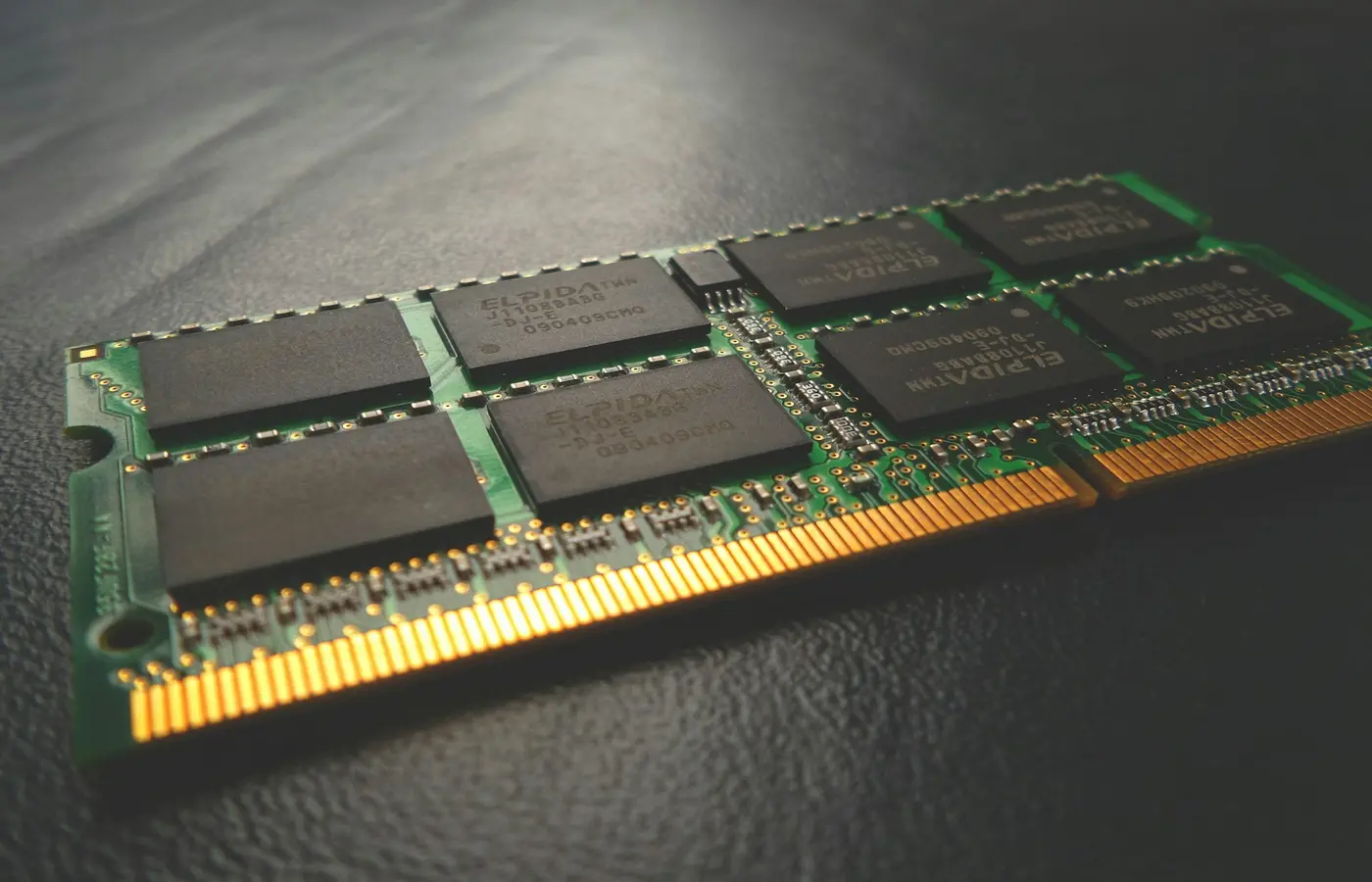
Other laptops use only removable SO-DIMM modules. In that case, the manual may state the number of slots, supported module combinations, and maximum total capacity.
Dell’s Latitude 3590 Owner’s Manual memory section provides this kind of detail: it lists two SO-DIMM slots, a documented maximum memory configuration, and supported DIMM combinations. This is the documentation pattern to look for, but its capacity and DDR4 requirements are specific to that Latitude model.
A slot count does not tell you whether a slot is empty. A laptop sold with 16GB may use one 16GB module, two 8GB modules, or soldered memory plus a module, depending on the model and configuration.
Use the service manual before deciding to open the laptop
A specification sheet can confirm that a slot exists, but it may not show whether the slot is reasonably accessible or which safety steps are required. Use the exact model’s owner’s manual, hardware maintenance manual, or service manual before opening the device.
The manual should show:
- The correct bottom-cover removal procedure
- Required tools and screw locations
- Whether screws are captive or different lengths
- Battery-disconnection instructions
- The location and orientation of the memory module
- How to release and install a SO-DIMM
- Warnings about internal batteries, cables, clips, or electrostatic discharge
- Reassembly and post-service checks
Do not substitute a teardown video or a forum post for the official procedure. Those sources can be useful leads, but they may cover a different revision or omit a safety-critical step.
Configuration differences can matter even within closely related machines. An ASUS service manual example warns that illustrations and maintenance procedures can vary by model configuration and directs owners to authorized service where a component is not covered. Treat that as a general documentation lesson: if your actual layout differs from the manual, stop rather than forcing a cover, connector, or memory module.
A service manual may also reveal that the RAM itself is removable but difficult to reach because other components must be removed first. That does not make the upgrade impossible, but it changes the risk. For a device still under warranty, or for anyone uncomfortable around internal batteries and delicate connectors, authorized service may be the safer option.
Separate installed RAM from the supported upgrade limit
The memory amount shown in Windows, macOS, Linux, or BIOS tells you what is installed and recognized now. It does not, by itself, prove:
- How many physical memory slots exist
- Whether a slot is empty
- Whether memory is soldered
- The largest supported module size
- The manufacturer-supported maximum capacity
- Whether a faster module will run at its advertised speed
Treat software information as a cross-check, not the final answer.
Before buying memory, build a small compatibility record from the official specification and manual:
- Memory layout: fully soldered, hybrid, or all slots.
- Slot count: how many removable SO-DIMM slots the manufacturer documents.
- Current population: whether the installed configuration uses one or more slots, where documentation or careful inspection confirms it.
- Memory generation: DDR4 and DDR5 modules are physically and electrically different; they are not interchangeable.
- Form factor: laptops with removable memory generally use SO-DIMMs, not desktop DIMMs.
- Supported total capacity: use the manufacturer’s stated maximum where available.
- Supported module capacities and configurations: follow a published table if one exists.
- Speed restrictions: a module can fit and still operate at a lower supported speed, or not be supported in a particular configuration.
For a current example of configuration-specific documentation, Dell’s Alienware 16X Aurora AC16251 memory page lists slot count, memory type, supported capacities, and notes that some memory options vary by country or region. The useful principle is not the specific capacities: check the exact table for your exact machine.
Check the machine before opening it, then decide whether to upgrade
Once the official documents support an upgrade, use a cautious workflow.
Before ordering
- Save important files and make sure you can access your backups.
- Confirm the exact SKU, memory layout, and supported maximum one more time.
- Buy from a seller with a clear return policy in case the documented configuration does not match the actual machine or the module is incompatible.
- Keep screenshots or copies of the specification page and service manual for the precise model.
- Check the warranty terms and regional service policy if the laptop is covered. Do not assume that opening a laptop automatically voids warranty coverage, but do not assume it has no consequences either.
During installation
- Shut the laptop down fully; do not use sleep or hibernation.
- Disconnect the charger and all peripherals.
- Follow the service manual’s opening sequence exactly.
- Disconnect or disable the internal battery if the manual directs you to do so.
- Handle the module by its edges and avoid touching its contacts.
- Insert the module at the angle shown in the manual, then press it down only until the retaining clips engage normally.
- Reassemble the laptop without forcing the cover or overtightening screws.
Stop and seek professional help if the bottom cover does not release as documented, the memory slot is absent, the module does not align easily, a connector differs from the manual, or the system layout is not what the official documentation describes.
After installation
Boot into firmware setup first if the manufacturer recommends it, then confirm the total recognized memory in the operating system. If the laptop does not start, reports less memory than expected, or displays an error, shut it down and revisit the manual rather than repeatedly forcing restarts.
Keep the original module until the upgrade is confirmed stable and your return period has passed.
When soldered RAM means choosing a different configuration or laptop
For prospective buyers, soldered memory changes the purchase decision more than the maintenance decision. If the exact model has no removable slots, choose the memory capacity for the period you expect to own the laptop—not only for today’s browser tabs and documents.
That does not mean every buyer needs the highest offered capacity. A basic office laptop used for email, web work, and light documents may have different needs from a machine intended for local development tools, large spreadsheets, photo work, virtual machines, or long-term multitasking. The important point is that a soldered-memory laptop gives you little or no room to correct an undersized choice later.
Before checkout:
- Confirm the full configuration identifier, not just the laptop family name.
- Read the manufacturer’s technical specification for that exact generation.
- Verify whether the listed memory is soldered, socketed, or mixed.
- Compare the cost of the higher-memory version with a model that has documented, accessible slots.
- Reconcile retailer listings with the manufacturer part number when possible.
- Check the seller’s return policy before purchase, especially if the listing is unclear about memory layout.
The safer default for buyers who expect changing workloads is a laptop with enough memory at purchase and clearly documented serviceability. If later upgrades matter, favor a model whose official documents specify removable slots, supported capacities, and a customer-accessible procedure.
FAQ
How can I tell if my laptop RAM is soldered without opening it?
Find the exact model or SKU, then check the manufacturer’s technical specification and service manual. Phrases such as “soldered to systemboard,” “onboard memory,” or “no memory slots” indicate soldered RAM. A service manual can confirm the physical layout without requiring you to open the laptop first.
Does “up to 32GB RAM” mean I can upgrade my laptop to 32GB?
No. “Up to” may describe the largest factory configuration, a supported total across soldered and removable memory, or a limit that depends on a particular processor or region. Check the slot layout, supported module sizes, and configuration table for your exact laptop.
Can a laptop have both soldered RAM and an upgradeable RAM slot?
Yes. Hybrid designs combine fixed onboard memory with one or more removable SO-DIMM slots. In that arrangement, only the module in the slot can be changed. Confirm the soldered amount and vendor-supported total capacity before buying a module.
Can I use a faster RAM module if it has the same DDR generation?
Not automatically. A faster module may run at a lower speed, may require a supported memory profile, or may not be listed in the manufacturer’s supported configurations. Match the DDR generation and form factor first, then follow the laptop maker’s documented speed, capacity, and configuration limits.