How to Check Whether a Laptop Can Run Your Required Software Before You Buy
Build a laptop software compatibility checklist covering the exact app version, operating system, hardware, licensing, peripherals, and IT rules.

The safe decision is to choose a laptop only after checking the exact software version and workflow it must support. A broad label such as “Windows laptop,” “engineering laptop,” or “Mac-compatible app” does not establish compatibility.
Start with the application publisher’s current requirements, add any plug-ins and peripherals, and then compare that list with the manufacturer’s specifications for the exact laptop part number. Published minimum requirements are a technical floor, not a promise of comfortable performance on your projects.
This is a research-based buying guide, not a report from testing a particular laptop or application. Compatibility rules change with software releases, operating-system updates, drivers, and institutional policies, so unresolved requirements should be confirmed with the software vendor or your organization before checkout.
Start with the exact software, version, and workflow
Do not begin with laptop specifications. Begin by defining what the laptop has to run.
Record the full application name, edition, and version. “AutoCAD,” “Adobe software,” or “Microsoft Office” is not precise enough if a course, employer, or client requires a particular release, plug-in, deployment method, or file format. Requirements for one release cannot automatically be transferred to the next.
Create a matrix like this before comparing laptops:
| Requirement | What to record |
|---|---|
| Core application | Exact name, edition, version, and update level |
| Add-ons | Plug-ins, extensions, runtimes, and license managers |
| Workload | Typical project size, file type, effects, models, or datasets |
| Multitasking | Other applications that must remain open concurrently |
| Execution | Local, browser-based, cloud-hosted, virtualized, or remote |
| Future requirement | A version your school or employer expects to adopt |
| Organization rules | Required OS, security tools, enrollment, or supported device type |
The workflow matters because opening an application is not the same as using it productively. A computer may satisfy the launch requirements while lacking suitable capacity for large projects, background services, local datasets, or concurrent applications.
Read the full official requirements page rather than relying on a search-result snippet or retailer summary. Requirements can include dependencies that are easy to overlook. For example, Autodesk’s release-specific Revit 2026 requirements cover more than CPU and memory: the page also addresses temporary storage, browsers, pointing devices, software frameworks, and virtualized operation. Those details apply only to the named Revit release and documented operating modes, but they illustrate why a four-line specification summary is insufficient.
Also check release notes and lifecycle documentation. Buying a laptop for an obsolete application can create a conflict: the old software may depend on an operating system or driver that a current laptop does not support.
Verify the operating system, edition, and processor architecture
An operating-system family is only the first check. Confirm all of the following:
- The exact supported operating system and release
- The required edition, such as a consumer or professional edition
- Whether the application is native to the processor architecture
- Required frameworks, runtimes, drivers, and security features
- Account, internet, and activation requirements
For the laptop, record the installed operating-system edition and full processor model from the manufacturer’s page for its exact regional part number. Do not infer these details from a product-family page when the family contains multiple configurations.
Architecture needs its own check
Applications and drivers may be built for x86, x64, Arm, or Apple silicon. Some operating systems offer translation or emulation for software written for another architecture, but the existence of that layer does not prove that every application feature, plug-in, driver, license component, or peripheral will work.
Look for an explicit support statement from the application publisher. If it documents only an emulated configuration, identify any restrictions. If it does not document the proposed architecture at all, ask the vendor in writing rather than treating an online anecdote as approval.
Drivers and low-level components deserve particular attention. A main application might open through translation while a required hardware driver, security key, capture device, or plug-in remains incompatible.
The operating system’s own requirements answer a different question. Microsoft’s Windows 11 specifications describe the hardware and setup floor for Windows itself. Meeting that floor does not establish that a particular professional application, GPU driver, peripheral, or project workload is supported.
Treat minimum CPU, memory, and storage requirements as a floor
Minimum requirements often answer whether a supported configuration can install or run, not whether it offers enough headroom for your work. They do not guarantee speed, stability, battery life, sustained performance, or capacity for future projects.
Use the software publisher’s recommended or workload-tier requirements when available. Preserve qualifications such as project size, dataset size, display resolution, or number of simultaneous users instead of copying only the largest number in a table.
Check the complete CPU identity
Record the complete processor model, not just a family badge such as Core, Ryzen, Snapdragon, or Apple silicon. Closely named processors can differ in architecture and capabilities.
Even the full processor name does not establish sustained laptop performance. Cooling, manufacturer power limits, memory configuration, firmware, operating mode, and whether the correct charger is connected can affect measured behavior. Without results for the exact laptop configuration, treat performance estimates as uncertain.
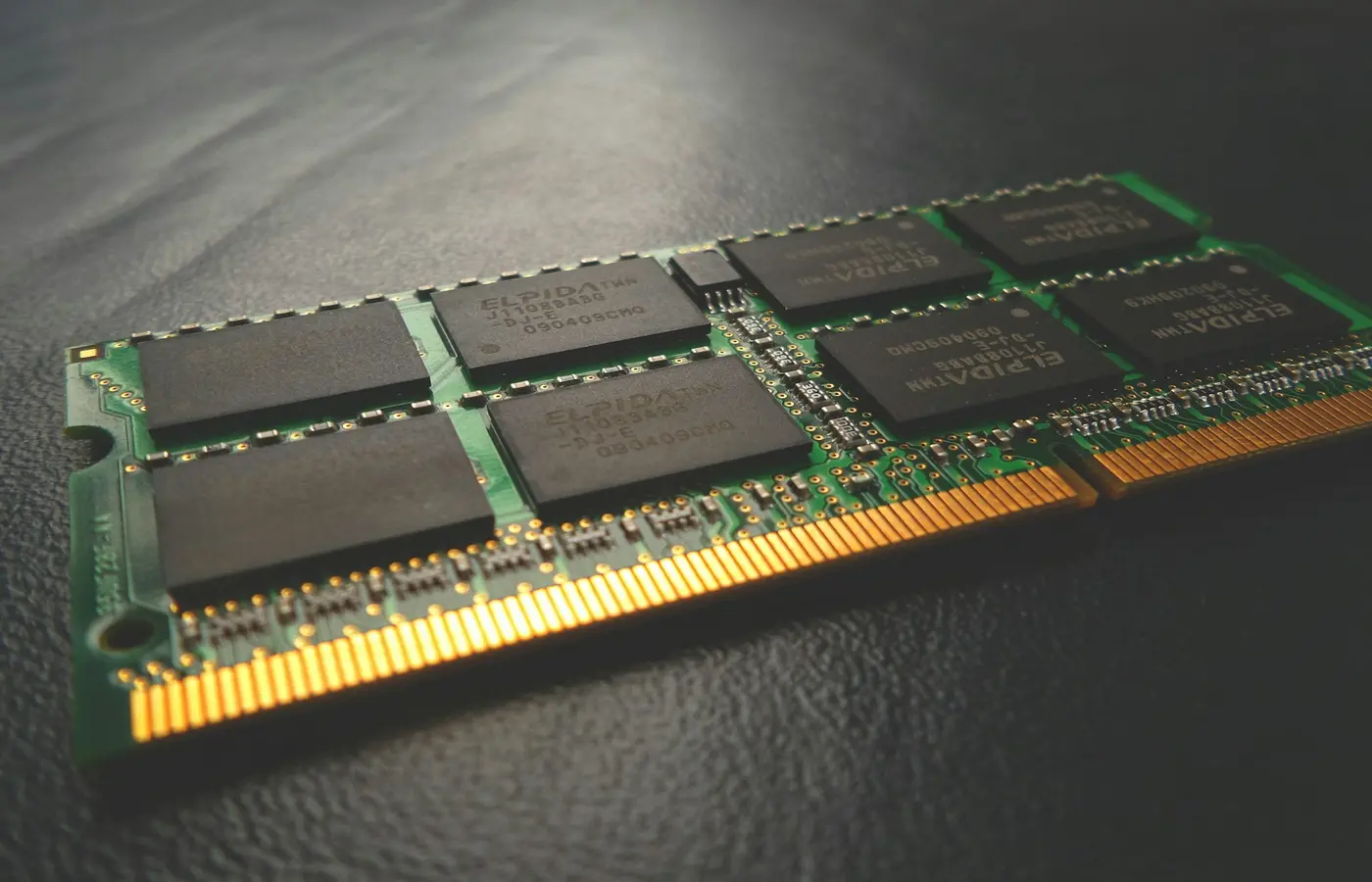
Separate installed RAM from upgradeable RAM
For memory, determine:
- How much is installed in the exact SKU
- Whether any memory is soldered
- The number of accessible slots, if any
- The documented supported capacity
- Whether an upgrade changes memory-channel configuration
- Whether owner upgrades affect the warranty or service path
A model family may be sold with different motherboard layouts or memory arrangements. Verify these details in the service manual for the exact generation and regional configuration; do not rely on a review of a similarly named model.
Budget for usable storage, not drive capacity alone
Compare the application’s installation space with its requirements for temporary files, caches, scratch data, local datasets, virtual machines, and updates. The operating system, recovery environment, and preinstalled software also occupy part of the advertised drive capacity.
Installation space and working space may be very different. Autodesk’s Revit 2026 page, for example, lists installation storage separately from recommended free space for temporary files. Do not reuse its figures for another application; use the distinction as a prompt to find equivalent documentation for your own software.
Check whether the laptop has a replaceable drive, a second storage slot, or entirely non-upgradeable storage. An upgrade path can improve capacity, but it cannot repair an incompatible operating system, processor architecture, or GPU feature set.
Check the GPU, display path, ports, and peripherals
A requirement for “dedicated graphics” or a “modern GPU” is too vague for a purchase decision. Translate the publisher’s language into details you can verify:
- Exact integrated or discrete GPU model
- Required graphics API and feature level
- Minimum dedicated video memory, if explicitly specified
- Supported driver branch or driver restrictions
- Vendor-certified hardware, where certification is required
- Required display count, resolution, or color workflow
Then compare those details with the exact laptop SKU. Do not assume that every configuration in a model family has the same GPU.
External displays add another layer. Confirm that the laptop can drive the required number and resolution of monitors through its actual ports, dock, and adapters. A USB-C-shaped connector does not by itself prove support for display output, charging, a particular data rate, or a specific docking feature. Check the manufacturer’s port implementation and the dock’s documentation.
Include every workflow-critical peripheral in the matrix:
- Dock and external monitors
- Headset, webcam, microphone, or audio interface
- Capture device or specialist controller
- Card reader or external storage
- Smart-card reader, fingerprint device, or security key
- 3D mouse, pen display, or other specialist pointing device
- Printer, scanner, measurement tool, or laboratory device
For each item, verify operating-system support, architecture-compatible drivers, required ports, power needs, and any vendor limitations. If a peripheral has no current driver for the proposed platform, an adapter will not necessarily solve the problem.
Confirm virtualization, firmware, and security dependencies
Virtual machines, containers, emulators, local servers, and device passthrough create requirements beyond those of the guest application.
Check the documentation for the application, host operating system, hypervisor or container platform, and guest operating system. Confirm:
- Supported host and guest operating systems
- Supported processor architectures
- Processor virtualization capabilities
- Firmware controls needed to enable those capabilities
- Operating-system edition requirements
- Memory and storage needed by both host and guest
- GPU acceleration and device-passthrough support
- Restrictions on nested virtualization
- Licensing terms for virtualized use
Do not assume that a processor feature is exposed by every laptop firmware or supported by every software stack. Likewise, a laptop may technically run a virtual machine while lacking the memory, storage, or cooling headroom required for the intended workload.
Security policy can also block an otherwise possible setup. An employer may prohibit changing firmware settings, running unapproved hypervisors, disabling security controls, or attaching unmanaged storage. A school may require managed-device enrollment that is unavailable for personally owned hardware.
Stop and seek written approval from IT or the software vendor if the required virtualized environment is absent from official support documentation. Compatibility experiments after purchase are not a substitute when access to work, coursework, or support depends on an approved configuration.
Resolve licensing and organization rules before checkout
Technical compatibility does not guarantee that you are licensed, permitted, or supported to use the software.
Verify these points before buying:
- Whether your license covers the intended operating system and device type
- Whether activation requires a personal, school, or employer-owned account
- Device limits and transfer or deactivation rules
- Online, offline, network-license, or VPN requirements
- Hardware-key or license-server compatibility
- Whether the organization supports personally owned laptops
- Required encryption, endpoint security, and management software
- Exam or assessment restrictions
- Whether IT requires a specific operating-system edition
Written requirements from a school, employer, client, or IT department should take precedence over a generic laptop recommendation. Ask for clarification if a document says “Windows required” without naming the supported version, edition, architecture, or management requirements.
Also examine the support consequences of planned changes. Replacing the installed operating system, changing firmware settings, or upgrading internal components can alter the manufacturer or organization support path even when the modification is technically possible.
Match everything to the exact SKU and preserve a return path
Retail listings frequently combine specifications from several configurations. Before ordering, record the manufacturer’s full regional part number and reconcile the seller’s listing with the manufacturer’s specification sheet and service documentation.
Use this final process:
- Save the requirements. Keep dated copies or links for the application, plug-ins, peripherals, and organizational rules.
- Identify the exact laptop. Record its full part number, CPU, GPU, memory, storage, operating-system edition, display, ports, and included charger.
- Resolve conflicts. Treat retailer data as provisional when it disagrees with manufacturer documentation. Ask the seller or manufacturer for written confirmation.
- Verify serviceability. Check the service manual, warranty terms, memory layout, storage layout, and approved power adapter.
- Check the return policy immediately before purchase. Look for return deadlines, restocking fees, custom-configuration exclusions, and rules for opened devices or software.
- Plan delivery verification. Know how you will confirm the delivered configuration and test the required workflow while the return window remains open.
After delivery, use operating-system tools or the manufacturer’s support utility to verify the device identity, CPU, GPU, installed memory, storage, operating system, and firmware. Install and activate the required software through approved channels, connect essential peripherals, and open representative files or projects.
A brief launch test can reveal obvious incompatibility, but it does not prove long-term performance, thermal behavior, stability, or capacity for every future project. Keep packaging and documentation until the required setup has passed the checks that can reasonably be completed within the return period.
Laptop software compatibility checklist
A laptop is a reasonable candidate only when you can answer these questions:
- Is the exact application version supported on the installed OS version and edition?
- Is it native to the processor architecture, or is the proposed translation layer officially supported?
- Are all required plug-ins, runtimes, drivers, and license components compatible?
- Does the exact SKU meet the publisher’s workload-appropriate requirements rather than only the minimum?
- Are memory and storage sufficient for concurrent applications, caches, updates, and project growth?
- Does the GPU provide the required API, features, driver support, and video memory?
- Do the laptop, dock, and adapters support every required display and peripheral?
- Is the virtualization environment documented and approved?
- Can the software be licensed and activated for this device and user?
- Does the laptop comply with school or employer security and management rules?
- Have upgradeability, warranty, charger needs, and the return policy been verified?
If a critical answer remains unknown, delay the purchase or choose the configuration explicitly supported by the software vendor and your organization. That is safer than trying to repair a platform-level incompatibility with later upgrades.
Frequently asked questions
Can an Arm-based laptop run software written for x86 or x64 processors?
Possibly, if the operating system provides translation or emulation, but that does not establish complete compatibility. Verify the exact application release, plug-ins, drivers, license tools, and peripherals against current first-party documentation. Native support is the safer choice when the workflow is critical and the vendor does not document the translated configuration.
Is meeting the published minimum system requirements enough?
Not necessarily. Minimum requirements may indicate only that installation or basic operation is supported. Compare recommended or workload-specific requirements with your actual projects, multitasking, temporary storage, and future software versions. Without measurements for the exact laptop and workload, acceptable performance cannot be guaranteed.
Does a browser or cloud version make laptop specifications irrelevant?
No. Cloud execution can move some processing away from the laptop, but the local device may still need a supported browser, sufficient memory, compatible security controls, reliable network access, display support, peripherals, and approved authentication. Confirm whether all required features and file formats are available in the browser version.
Can RAM or storage upgrades fix an incompatible laptop later?
They can address capacity constraints only when the exact laptop supports the upgrade. They cannot add support for an incompatible processor architecture, missing GPU feature, unsupported operating system, unavailable driver, prohibited device type, or unsuitable port implementation. Verify upgradeability before purchase rather than assuming it.