How to Choose a Laptop for College: Match Your Major, Required Software, and Campus Setup
Choose a college laptop by checking required software, your major, the exact configuration, campus support, ports, repair coverage, and return terms.

The safest choice is the least restrictive laptop that meets your department’s current requirements and runs its hardest required application. Check those requirements before comparing brands, processors, or sale prices.
If your program has no stronger rule, a mainstream Windows or macOS laptop with 16 GB of RAM and a 512 GB SSD is a cautious general-purpose starting point. It is not a universal requirement or a guarantee that the machine will suit every course for four years. Engineering, architecture, business, data, and media programs can impose operating-system, memory, graphics, or processor-architecture restrictions.
Do not buy yet if your major is undecided, your department’s guidance is out of date, or you are relying on an unconfirmed promise that Windows-only software will work through virtualization or a campus remote desktop.
Check your department before comparing laptops
Use this order of authority:
- Requirements from your department or degree program
- University-wide IT recommendations
- System requirements for the exact software release used in class
- General laptop buying advice
Requirements can vary between majors at the same university. Rowan University, for example, tells students that the appropriate laptop depends on their major and directs them to contact their department. The University of Dayton publishes school- and major-specific guidance, while the Duquesne University recommendations illustrate how guidance can differ among general, business, and music programs.
Before treating any university page as current, check:
- Intended major and concentration
- Catalog year and enrollment term
- Campus, including online or satellite programs
- Page publication or revision date
- Required software list for first-year and later courses
- Whether a specification is mandatory, recommended, or merely supported
A page from another university is useful as an example of the conflicts you may encounter. It is not a substitute for your own school’s rules.
Choose the operating system around the hardest application
Personal familiarity matters, but compatibility comes first. Identify the application in your likely course sequence with the narrowest support and verify that application before choosing Windows, macOS, ChromeOS, or a processor architecture.
The full compatibility check should include:
- Exact application name and release
- Required plug-ins, add-ins and device drivers
- Supported operating-system versions and editions
- Supported processor architecture, such as x86-64 or Arm
- Graphics hardware and driver requirements
- License availability for students
- Exam, proctoring or security software
- Department support for local installation, virtualization and remote access
This matters even when the underlying coursework does not look computationally demanding. The University of Connecticut School of Business, for example, identifies Windows classroom software and Windows-specific instruction as reasons for its platform guidance.
Engineering can be more restrictive. Oregon State University’s College of Engineering warns that some courses require Windows-only applications and discusses the limits of virtualization, Citrix access and computer labs. Ohio State Engineering Technology Services is another example of a department that distinguishes native Windows systems from macOS, Chromebooks and Windows-on-Arm devices.
Do not interpret “runs Windows” as a complete compatibility statement. An Arm-based Windows laptop and an x86-64 Windows laptop can differ in application, plug-in and driver support. Ask departmental IT about the exact processor and Windows edition, not just the Windows badge.
Virtualization and remote access are separate plans
A virtual machine may fail to provide the required processor architecture, graphics acceleration, peripheral access or software licensing. Support also depends on the host laptop, virtualization product and guest operating system.
A remote desktop or campus lab avoids some local compatibility problems, but it introduces others: network dependence, capacity limits, restricted hours, file-transfer procedures and limited access to local peripherals. Confirm the service with campus IT before treating it as a replacement for a compatible laptop.
Set memory, storage, processor and graphics by workload
Specifications should follow the work you need to do, not a processor-family badge.
Memory
For general writing, research, video calls and browser-based coursework, 16 GB is a cautious baseline when no department rule exists. Consider 32 GB or more only when required software, large datasets, media projects or multiple virtual machines justify it.
Institutional recommendations are not uniform. The University of Illinois iSchool publishes its own platform and memory requirements, while Rowan publishes a different general recommendation. The UC Irvine engineering laptop FAQ distinguishes between programs for which it recommends 16 GB and those for which it recommends 32 GB.
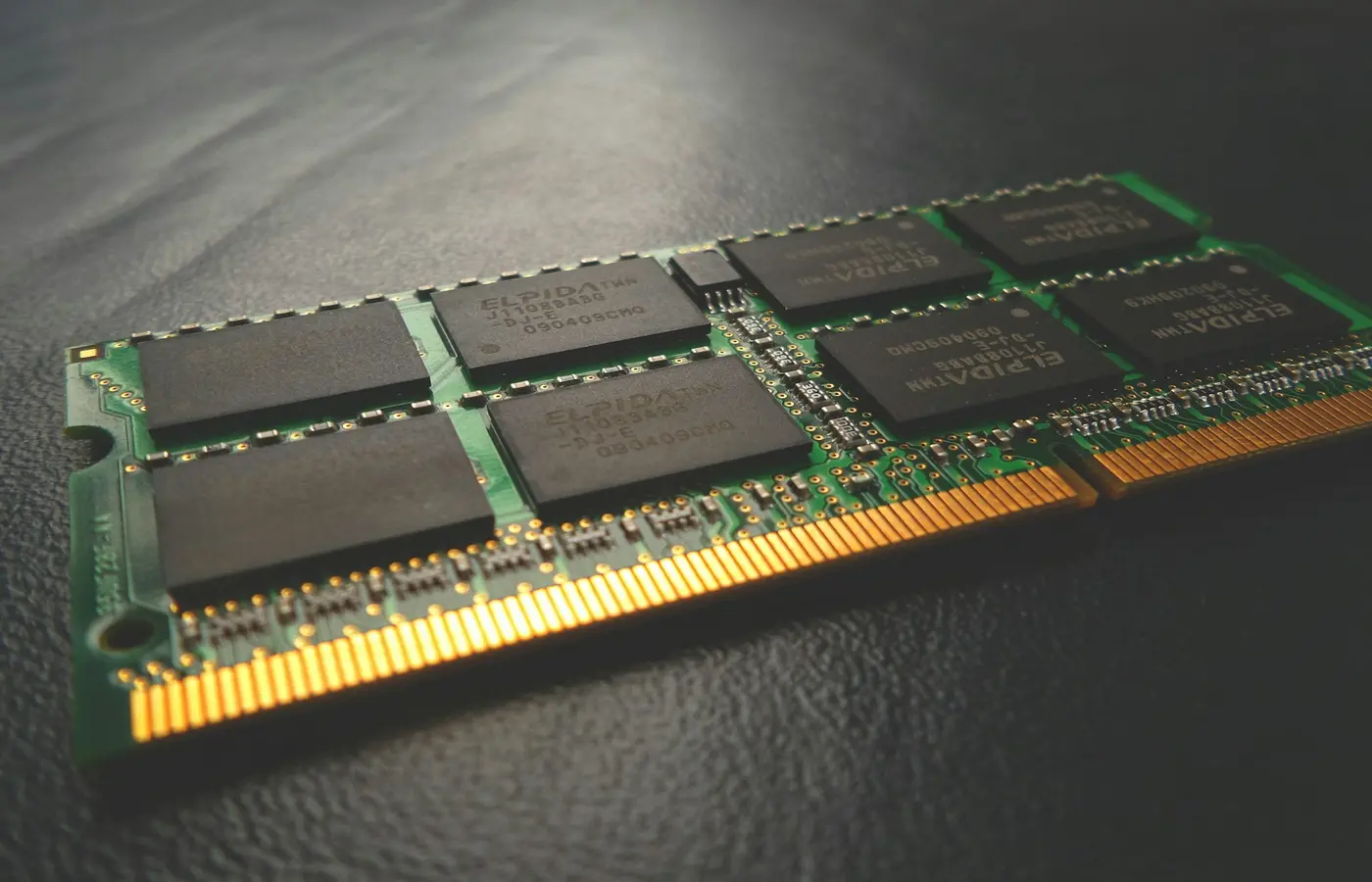
Also determine whether memory is soldered. A laptop sold with 16 GB but no upgrade path is a different ownership proposition from one with replaceable modules.
Storage
A 512 GB SSD is a reasonable general starting point when no stronger rule applies. Smaller drives can become restrictive when local applications, virtual-machine images, raw media or datasets are required. Larger storage may be justified, but it should not replace a backup plan.
Check whether the SSD is replaceable, whether opening the laptop affects service terms, and whether your school supplies managed cloud storage. The University of Denver’s laptop guidance discusses storage and backup as institution-specific considerations.
Processor
Do not buy from labels such as Core i5, Core i7, Ryzen 5, Ryzen 7 or “AI PC” alone. Record the full processor name and architecture. Performance can also depend on the laptop’s power limits, cooling design and selected power mode, so a family badge does not establish measured behavior.
If performance matters, look for independent measurements from the exact laptop configuration. Do not transfer benchmark or thermal results between different processors, cooling systems or power profiles.
Graphics
Integrated graphics are sufficient for many academic workloads. A discrete GPU becomes relevant when the department or software vendor identifies a supported GPU, graphics-memory requirement or workload that benefits from it.
Do not infer this need from “engineering” or “design” alone. Verify the actual CAD, simulation, rendering, video or machine-learning application, project scale and whether processing happens locally or on university systems.
Match the configuration to your likely course sequence
Your department’s rules override every row in this table.
| Workload | First compatibility question | Sensible direction when no stronger rule exists | Trigger for a stronger configuration |
|---|---|---|---|
| Humanities and social sciences | Are exams, statistics tools or language applications platform-specific? | Windows or macOS, 16 GB RAM, 512 GB SSD | Large research datasets, specialist software or extensive local archives |
| Business | Does the program teach with Windows-only applications or add-ins? | Prefer native Windows when the department specifies it | Analytics tools, large models, virtual machines or a program-specific memory rule |
| Computer science and data work | Which operating systems, containers, virtual machines and GPU libraries are used? | 16 GB RAM and 512 GB SSD for lighter development; choose the OS the department supports | Multiple VMs, large datasets, local AI work or a 32 GB department recommendation |
| Engineering and CAD | Are required applications Windows-only, and do they require a supported discrete GPU? | Native Windows is the safer choice when Windows-only coursework is expected | CAD, simulation, 3D projects or explicit CPU, GPU and 32 GB requirements |
| Architecture and 3D design | Which modeling and rendering packages are required? | Follow the application vendor and studio guidance | Large scenes, GPU rendering, high-resolution assets or external-display requirements |
| Visual and media production | Which editing, audio and color workflows are taught? | Windows or macOS based on required applications, with adequate local storage | High-resolution video, large sample libraries, complex effects or specified GPU support |
| Undecided | Can likely majors use the same platform? | A serviceable 16 GB/512 GB mainstream laptop, if purchase cannot wait | Any plausible major with a platform-specific requirement; otherwise delay buying |
The important distinction is between a workload that is technically possible and one the department will actually support. A professor may provide instructions only for one operating system even when alternatives exist.
Plan for the campus setup and years of ownership
Compatibility gets the laptop through installation. Ownership details determine whether it remains practical.
Daily carry and charging
Compare the weight of the laptop with its charger, not the computer alone. Check whether charging is available in the classrooms you will use and whether the laptop accepts standard USB-C charging or a proprietary adapter.
Manufacturer battery figures are controlled claims, not expected campus runtime. Real battery life changes with display brightness, wireless use, video calls, software load, power mode and battery age. Use independent measurements from the exact configuration when available, then leave a margin for aging and heavier days.
Ports, docks and monitors
List what you expect to connect: headset, mouse, external storage, projector, Ethernet, card reader and one or more monitors. For a dorm desk, verify all of the following against the exact laptop manual:
- Number of supported external displays
- Maximum resolution and refresh rate for each output
- USB-C DisplayPort or Thunderbolt capabilities
- Dock compatibility
- Charging power delivered through the dock
- Required cable standard
A USB-C-shaped port does not guarantee video output, high-speed data or charging. Check the port version and supported functions rather than its shape.
Repair, warranty and backup
Investigate warranty length, accidental-damage options, local service availability and typical repair procedure. Ask whether the university has approved repair services, rentals or loaners. Coverage that requires shipping the laptop away may leave you without a machine during coursework.
Maintain a separate backup of current assignments. Cloud sync can help, but confirm storage limits, retention policies and what happens when you graduate or lose student status.
Verify the exact SKU before paying
One laptop family can contain materially different displays, memory arrangements, processors, graphics hardware and ports. Copy this checklist and complete it from the manufacturer’s specification page or manual—not only the retailer title.
Hardware and purchase checklist
- Manufacturer and complete model name
- Manufacturer part number or SKU
- Full CPU name and processor architecture
- Full integrated or discrete GPU name
- Installed RAM, maximum RAM and upgrade method
- Whether memory is soldered or replaceable
- SSD capacity, interface and replacement options
- Display size, resolution, panel type and touch support
- Port versions and supported functions
- External-display count, resolution and refresh-rate support
- Charger connector and wattage
- Webcam, microphone and headset connection
- Keyboard layout and region
- Operating-system edition
- Warranty region, duration and service method
- Accidental-damage coverage, if needed
- Seller, delivery estimate and written return policy
Software and campus checklist
- Exact required application releases
- Supported operating system and processor architecture
- Required plug-ins, drivers and peripherals
- Student license terms and availability
- Virtualization permitted by the vendor and department
- Remote desktop or lab access confirmed by campus IT
- Off-campus access, network and scheduling restrictions checked
- Exam and proctoring software compatibility confirmed
- Exact SKU approved by departmental IT when guidance is unclear
Save the manufacturer specification, retailer listing and any written response from IT. Before opening or upgrading the laptop, verify whether activation, enrollment, component changes or discarded packaging can affect return eligibility.
The safe default—and when to wait
If your department has no platform restriction, a mainstream Windows or macOS laptop with 16 GB of RAM, a 512 GB SSD, a comfortable keyboard, a verified monitor connection and support available where you study is the cautious default.
Choose native Windows when required applications or departmental instruction are Windows-only. Choose macOS when all required software supports the Mac’s operating system and processor architecture, or when your program explicitly recommends it. A Chromebook is appropriate only when the department confirms that browser-based tools and supported remote services cover the complete course sequence.
Wait to buy when:
- Your major may change to one with incompatible requirements
- The department has not published guidance for your enrollment term
- Required application versions have not been announced
- Arm versus x86-64 support is unclear
- A virtual-machine plan has not been approved
- Remote lab availability is only assumed
- The return window will expire before you can verify compatibility
A delayed purchase is less disruptive than owning a new laptop that cannot run a required application.
Frequently asked questions
Is a Chromebook enough for college?
It can be enough for programs that rely on browser-based coursework and explicitly support ChromeOS. It is a risky default when courses require locally installed Windows or macOS applications, specialist drivers, virtual machines or unsupported proctoring tools. Obtain departmental confirmation for the full likely course sequence.
Can a Mac run Windows software required for engineering or business courses?
Sometimes, but not automatically. Compatibility depends on the Mac’s processor architecture, the Windows version, virtualization software, application licensing, graphics support, drivers, plug-ins and department policy. If the course requires native Windows or the department will not support a virtualized setup, buy a compatible Windows laptop instead.
Do college students need 16 GB or 32 GB of RAM?
For students without a stronger program requirement, 16 GB is a cautious general-purpose baseline. Consider 32 GB when required software, large datasets, complex media work or multiple virtual machines justify it. Check whether RAM can be upgraded later before choosing a lower-memory configuration.
Should I rely on virtualization, remote desktop or campus labs instead of buying a Windows laptop?
Only after confirming the exact service and its limits with departmental IT. Ask about supported applications, off-campus access, network requirements, capacity, hours, file transfer and peripheral support. These options can be useful fallbacks, but they are not automatically equivalent to running the application locally.