Laptop Buying Guide: Match the CPU, RAM, Storage, and Display to Your Workload
Choose a laptop by workload, not badges. This guide explains how to balance CPU, RAM, storage, display, graphics, ports, portability, and ownership.

The safest laptop purchase starts with your workload, budget, and ownership plans—not with a processor badge or a retailer’s ranking. A student who mainly writes, browses, and attends video calls has different priorities from a video editor, developer, gamer, or frequent traveler.
For everyday work, a sensible configuration with a comfortable display, enough memory, fast storage, useful ports, and a serviceable warranty is often a better choice than paying for a premium CPU that will remain lightly used. Creators and gamers should spend more carefully: sustained performance, graphics hardware, cooling, display behavior, and the exact power configuration matter more than a component name alone.
This is a research-based buying framework, not a hands-on review. No Laptop Advices laptop was tested or measured for this article, so it does not provide original battery, performance, thermal, acoustic, display, or durability results. Use the checks below to verify the exact configuration you are considering.
Start With the Workload, Budget, and Ownership Horizon
Before comparing laptops, write down the applications and tasks that matter most. “General use” is too broad to guide a purchase. Consider:
- Study and office work: documents, web applications, email, spreadsheets, presentations, video meetings, and media playback.
- Development: code editors, local databases, containers, virtual machines, emulators, and compilers.
- Creative work: photo editing, video production, music projects, 3D design, animation, or computer-aided design.
- Gaming: the specific games, resolution, quality settings, frame-rate target, and whether the laptop will usually be plugged in.
- Portable use: travel, commuting, classroom use, or working away from a desk for long periods.
The first question should be what the laptop must do reliably. This workload-first approach is also recommended by WIRED’s laptop buying guide, which places intended use before detailed specifications.
Next, set a firm budget ceiling and decide how long you expect to keep the machine. A laptop intended for occasional home use may not justify expensive graphics hardware. A computer expected to remain useful for several years may justify more memory, a larger SSD, a better display, or a model with accessible replacement parts—but only if the exact configuration supports those upgrades.
Also record requirements that specifications often hide:
- Required operating system and application support
- Preferred screen size and keyboard layout
- Maximum acceptable weight and charger size
- Ports for monitors, projectors, storage, phones, cameras, or wired networking
- Warranty length and regional service arrangements
- Return conditions if the display, keyboard, or battery behavior is disappointing
There is no universal replacement timetable. Repair access, software support, battery condition, upgradeability, and your changing workload all affect useful life. Treat longevity as something to investigate rather than a promise attached to a price tier.
Match the Processor to the Work You Actually Do
A CPU influences application responsiveness, compilation, exports, multitasking, and some games, but its model name does not tell the whole story. Compare the complete processor name, generation or architecture, operating system, and the laptop’s power and cooling design.
For browsing, documents, video calls, streaming, and ordinary office applications, a current mainstream processor is often sufficient. Spending more on a higher tier may produce little practical benefit if the rest of the laptop has an uncomfortable keyboard, a poor display, inadequate memory, or limited storage.
More demanding work changes the decision. Developers using multiple virtual machines, creators exporting large projects, and professionals running sustained calculations should investigate multicore performance and whether the laptop can maintain that performance over longer workloads. A short burst of high speed is not the same as sustained performance during an export or compile.
Two laptops using the same processor can behave differently because of:
- Configured power limits
- Cooling capacity and fan profiles
- Firmware and operating-system settings
- Memory configuration
- Application optimization
- Performance mode and battery mode
For that reason, do not transfer a benchmark result from one laptop to another merely because the CPU names match. If you use independent measurements, check that they identify the exact laptop model, power mode, firmware, cooling configuration, and test conditions. Otherwise, treat the result as context rather than a prediction of your machine.
Integrated graphics may be enough for everyday use, video playback, light creative applications, and some games, but the correct decision depends on the software and settings you need. Do not assume that a processor’s AI branding, “creator” label, or graphics badge guarantees a useful feature in your applications. Confirm support in the software’s current documentation.
Choose RAM and Storage for Multitasking and File Growth
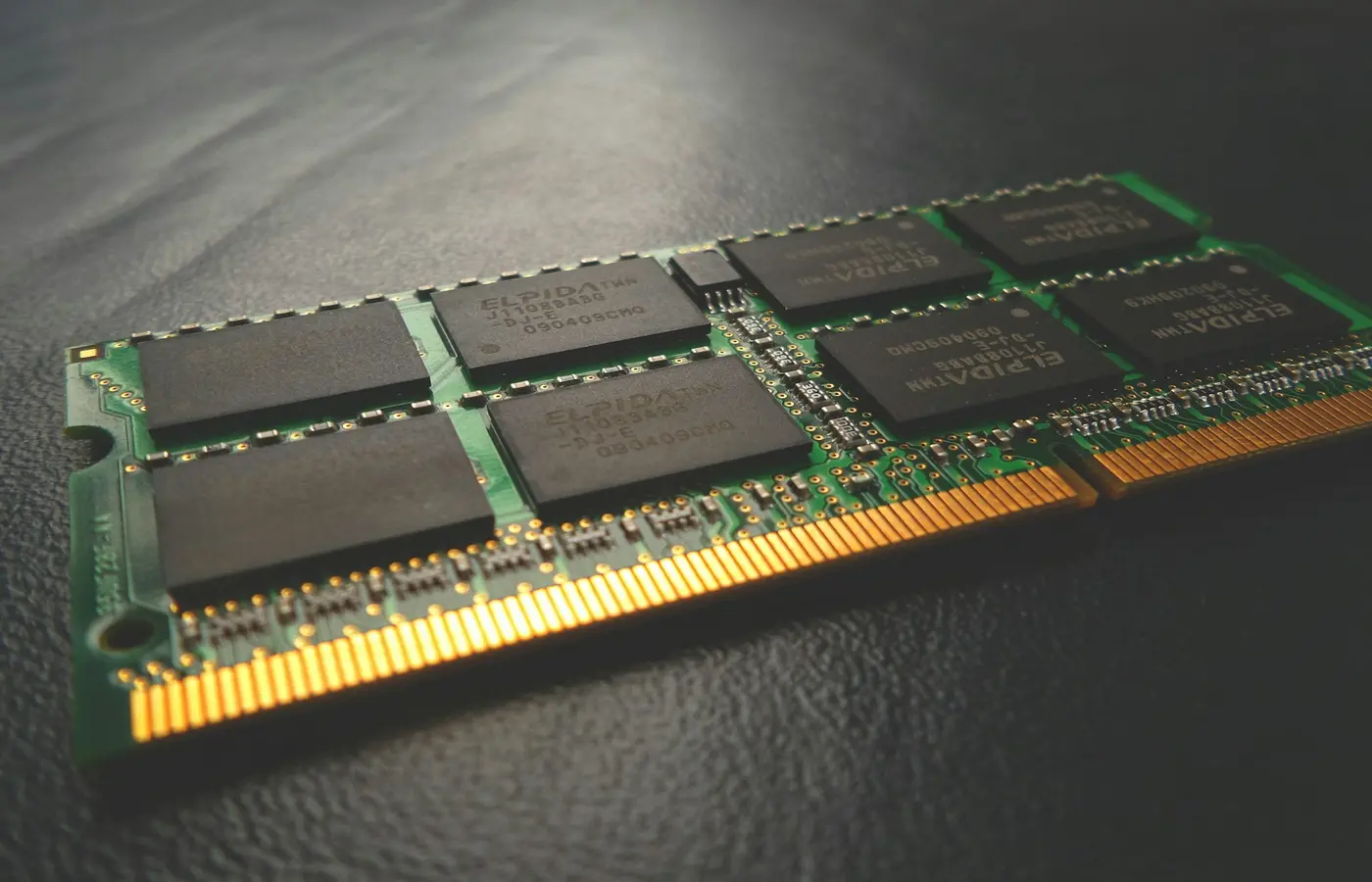
RAM affects how many applications and browser sessions can remain active without heavy reliance on storage. The right amount depends on your software mix, number of browser tabs, project sizes, virtual machines, and how long you intend to keep the laptop.
Instead of treating one capacity as mandatory for everyone, ask what happens during your busiest normal day. A student who uses a browser, documents, messaging, and video calls has a different requirement from a developer running containers or a creator working with large media files. Application vendors’ requirements are more useful than a universal internet rule, especially for demanding creative tools, virtual machines, and games.
Verify these details for the exact model:
- Installed RAM capacity
- Memory type and speed, if published
- Whether the memory is soldered
- Whether an empty slot exists
- Maximum supported capacity
- Whether a service procedure is available
Soldered memory is not automatically a reason to reject a laptop, but it makes the purchase configuration more important. If you cannot upgrade later, choose capacity based on your likely workload rather than your lightest current use.
Storage is a separate decision. An SSD can make startup and application loading feel responsive, but capacity determines how easily you can keep applications, projects, games, photos, and system files on the machine. Check the actual usable configuration rather than relying on a retailer’s rounded description.
For storage, verify:
- Installed capacity and the operating system’s partitioning
- SSD interface and form factor
- Whether a second drive is supported
- Whether the drive can be replaced
- Access requirements and available service documentation
A larger SSD is particularly useful when your work involves local media, games, virtual machines, or large project files. If your files live primarily on a managed cloud service or external storage, capacity may be less important—but confirm that your workflow still works when offline.
Evaluate the Display, Graphics, and Ports as One Package
The display is the part of a laptop you look at for hours, yet listings often reduce it to size, resolution, and refresh rate. Those figures are useful starting points, not complete evidence of quality.
For the exact SKU, verify:
- Screen size and resolution
- Refresh rate
- Panel technology, when stated
- Matte or glossy finish
- Touch support
- Stated brightness and color coverage
- Webcam placement and resolution
Vendor display specifications should be treated as claims for that configuration. Independent measurements are more useful only when they match the exact panel and laptop model. A product family may be sold with several panels, and a review of one variation should not be presented as evidence for another.
For office work and study, prioritize readability, comfortable scaling, viewing angles, and a layout that suits your applications. A very high refresh rate may be less valuable than a better keyboard, brighter screen, longer battery, or additional memory if you do not play games or use software that benefits from it.
For gaming, 3D work, and GPU-accelerated creative applications, verify the full graphics processor name and, where published, its power range. Also check graphics memory, display-output support, and the requirements of the games or applications you actually use. A dedicated GPU is not automatically worthwhile for a non-gaming laptop. It adds cost and can affect size, weight, power use, and charger requirements without improving ordinary web or office tasks.
Ports should be compared against your existing accessories rather than counted in isolation. Make an inventory of what you connect:
- USB devices and external drives
- External monitors or projectors
- Headsets and microphones
- Wired networking
- SD or microSD cards
- Docking stations
- Charging accessories
Confirm the connector type, data capability, display-output support, charging behavior, and location. A laptop can technically have the right port while still requiring an adapter for your intended setup.
Check Portability, Battery Claims, Software, and Serviceability
Portability is more than the weight printed on a product page. Include the charger, cables, protective case, and any adapters you must carry. A lighter laptop may be preferable for daily commuting, while a heavier model may be justified by sustained performance, a larger display, or a more accessible service design.
Verify the exact configuration’s dimensions, weight, battery capacity, included charger, wireless features, webcam specification, and operating system. Advertised battery life is a vendor test result or estimate, not a guaranteed runtime. Brightness, browser activity, video calls, background applications, wireless use, performance mode, and battery condition can all change the result.
Independent battery measurements are useful only when the test conditions and configuration are disclosed. Do not apply a result from a different panel, processor, battery size, firmware version, or power profile to the laptop you are considering.
Software compatibility deserves special attention when comparing operating systems, newer processor architectures, or laptops marketed around AI features. Confirm support for the applications, drivers, plug-ins, management tools, peripherals, and file formats you need. An AI label does not by itself establish that a particular feature works in your workflow.
Ownership details can matter as much as performance. Before buying, look for the manufacturer’s service manual and verify:
- Whether the SSD, battery, wireless card, or keyboard can be replaced
- Whether memory is soldered
- Which parts are available in your region
- What the warranty covers and excludes
- How service is arranged locally
- Whether opening the device affects any warranty condition
Do not make a repairability claim from a product photograph or a retailer listing. Use the exact model number and the manufacturer’s documentation.
Build a Scenario-Based Shortlist
Students and office users
Start with a comfortable display, reliable keyboard, sufficient memory for your normal multitasking, adequate SSD capacity, useful ports, and a manageable charger. A mainstream processor is usually the safer default when the workload is primarily browser-based and document-focused. Spend more on graphics only if your applications or games require them.
Developers
Identify whether you use containers, virtual machines, emulators, local databases, or large codebases. Those tasks can make memory capacity and sustained multicore performance more important than a thin chassis or a premium display. Check operating-system, virtualization, and toolchain support before choosing an unfamiliar platform.
Creators
Match the laptop to the specific application and media format. Check CPU behavior under sustained work, GPU acceleration, memory capacity, storage expansion, display characteristics, external-monitor support, and the availability of a suitable return policy. A display that looks impressive on paper may still require independent verification for color-critical work.
Gamers
Choose from the target games and settings outward. Verify the exact GPU, graphics memory, power range where published, cooling design, display refresh rate, resolution, and charger. Do not compare gaming laptops by GPU family alone when their power configurations differ.
Long-term owners and frequent travelers
Prioritize the compromises you will live with every day: weight, charger size, keyboard, display, ports, battery capacity, memory upgradeability, SSD access, warranty, and repair path. A slightly less powerful laptop with better ownership characteristics may be the safer choice if you rarely use maximum performance.
Verify the Checkout Configuration
Retail listings often group several configurations under one product family. Before paying, record the exact model or part number and compare it with the manufacturer’s specifications. Confirm:
- Full CPU and GPU names
- GPU power information, when relevant
- Installed RAM, memory arrangement, and upgrade status
- SSD capacity, interface, and expansion options
- Display size, resolution, refresh rate, finish, and touch support
- Operating system and keyboard layout
- Included charger and charging standard
- Ports and wireless features
- Warranty and regional service terms
- Return policy and the price or availability date
If the listing does not identify the panel, memory configuration, or exact part number, treat that uncertainty as a purchasing risk. Ask the seller or choose a listing with clearer documentation.
Frequently Asked Questions
How much RAM does a laptop need for school, office work, gaming, or creative applications?
There is no capacity that is correct for every workload. Start with the applications you use, your busiest multitasking pattern, and whether the memory can be upgraded. Check official requirements for unusually demanding software, and choose more capacity at purchase when the memory is soldered.
Is a dedicated graphics card necessary for a non-gaming laptop?
Usually not if your work is limited to browsing, documents, video calls, and ordinary media playback. It becomes more relevant for 3D applications, GPU-accelerated creative work, local compute tasks, or games. Verify that your software benefits from the specific GPU before paying for it.
Should I prioritize a faster processor, more RAM, or a larger SSD?
Prioritize the component most likely to limit your workload. Memory matters when multitasking or running large applications; storage capacity matters when files and applications do not fit comfortably; CPU performance matters for compute-heavy or sustained tasks. Improving a component that is not your bottleneck may produce little benefit.
How can I confirm that the laptop listing has the display and memory configuration I want?
Use the exact model or part number, then compare the retailer’s listing with the manufacturer’s configuration page and service documentation. Confirm the panel details, installed memory, soldered or replaceable design, operating system, and return policy. If the listing leaves any of these unclear, do not assume the most attractive specification shown in a product-family description applies to your unit.
Conclusion
The best laptop is the one whose complete configuration matches your real workload and ownership constraints. Start with applications, budget, portability, and replacement plans. Then verify the CPU, RAM, SSD, display, GPU, ports, battery claims, software support, warranty, and service path for the exact SKU.
Specifications can narrow the field, but they do not guarantee real-world speed, battery life, screen quality, or long-term value. Spend first on the bottleneck you can identify, and treat every unclear configuration detail as a reason to verify before checkout.